

Baxnet Blog · founder-note
Privacy Boundaries Beat AI Hype
Short answer: The strongest trust signal is a clear boundary about where message content is processed and where it is not.
Why this matters
Most people can tell when a product page is dodging the hard question. For Mimoto, the hard question is simple: where does private message content go during analysis?
What we learned from user conversations
When we lead with a concrete boundary, trust goes up and confusion goes down.
- On-device means local processing.
- Local processing means no default message-content upload path.
- Clear limits make the product easier to choose honestly.
Diagram and screenshot checklist
Our default post format uses one diagram and one product screenshot so readers can map concepts to real UI behavior.
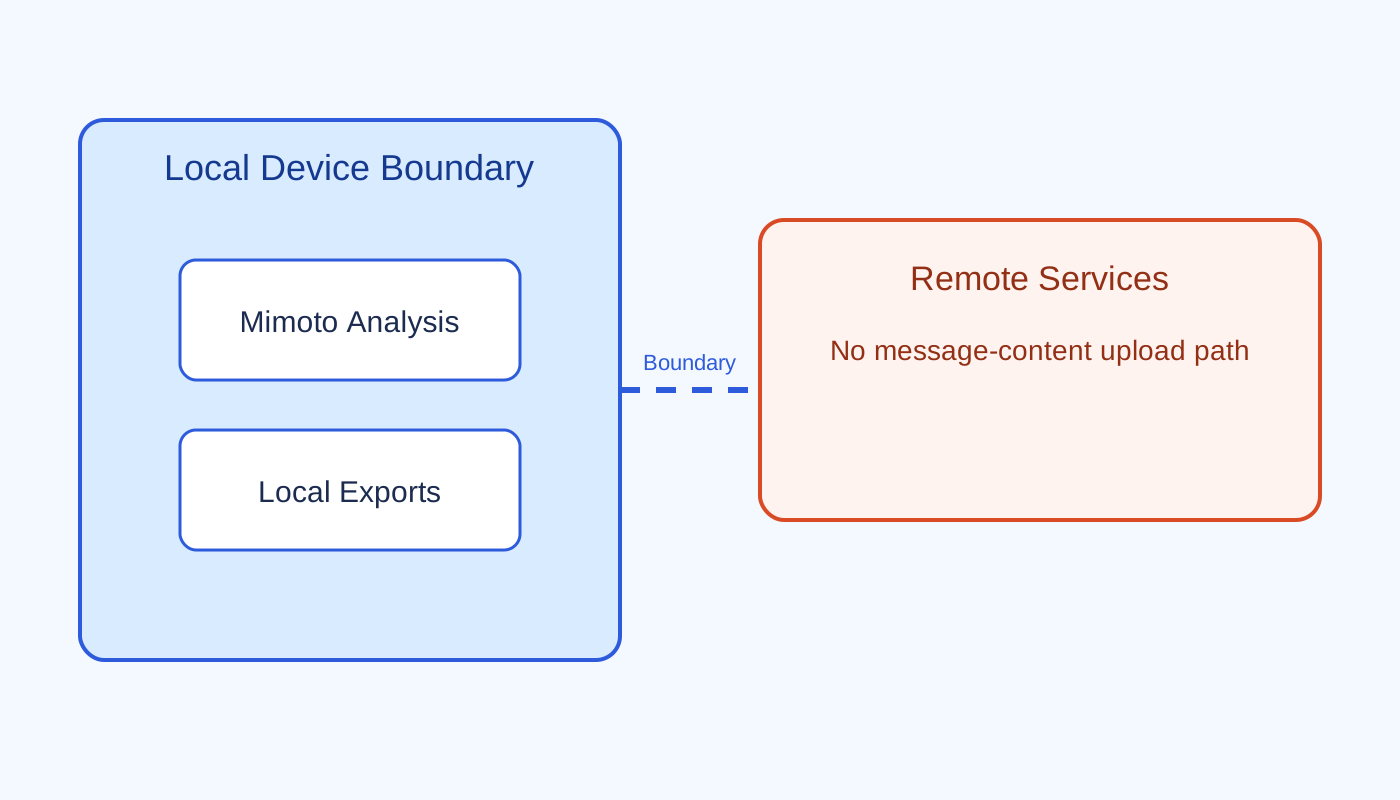
Caption: The boundary is the product. The architecture should make the promise obvious.

Caption: This stand-in visual marks the workflow surface; swap it with a real in-app screenshot when publishing a release-specific walkthrough.
Worked example
A user asks if they need to upload private conversations to get relationship insights. We answer in one sentence, show the boundary diagram, and link to a technical explainer with exact scope and limitations.
Limitations / not a fit
This approach is not ideal for cloud collaboration products that require shared remote datasets. In those cases, a local-first boundary may conflict with team-wide convenience goals.
Related pages and posts
- How Mimoto works
- Privacy, trust, and architecture
- How to use diagrams, screenshots, and videos in Baxnet posts