

Baxnet Blog · technical-explainer
What is personal chat intelligence?
TL;DR: Personal chat intelligence is structured understanding built from private conversation history: reports, relationship context, timelines, and source-linked observations the user controls.
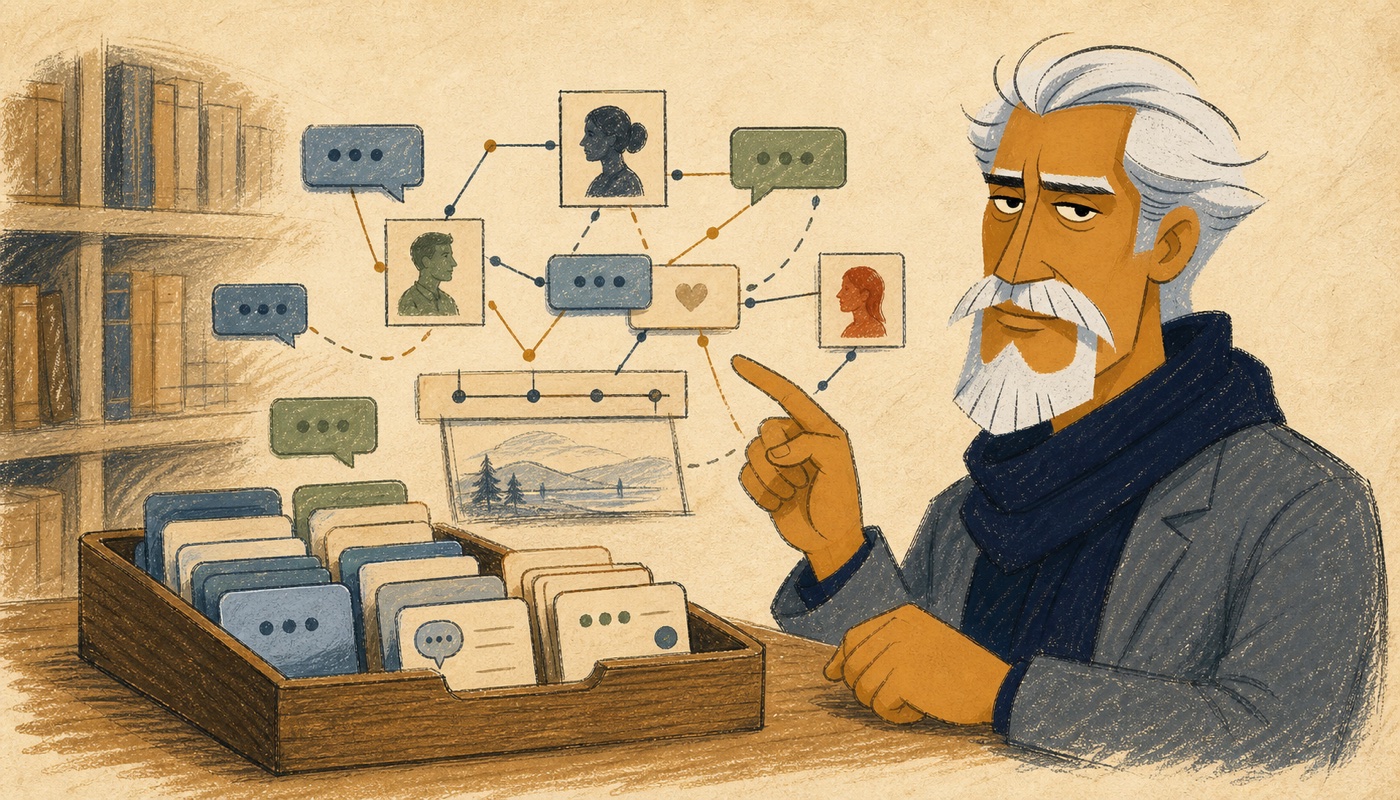
The simplest way to explain personal chat intelligence is to start with what a conversation archive already contains.
A long message history is more than text. It is timing, cadence, jokes, obligations, conflict, repairs, plans, decisions, shared memories, and small practical facts that usually disappear into the scroll. Some of it is trivial. Some of it is sensitive. Some of it becomes important months or years later.
Seen through Sensei’s lens, the job is not to make messages sound clever. The job is to help a person understand the private context they already have, then decide what deserves attention.
Personal chat intelligence is structured understanding built from conversations. It turns supported message history into reports, searchable exports, relationship context, timelines, and source-linked observations. The important word is structured. A useful system should show the pattern, where it came from, how strong it is, and where the user can inspect or correct it.
That is the direction Mimoto is built around.
From Chat History To Context
Most people experience message history as a search box and a scroll. That works when you remember the exact word, date, or person. It is much weaker when the question is more human.
When did this friendship get quieter?
Who carried the practical planning in this group?
What topics keep coming up with this person?
Which conversations would I need to review before a serious decision, legal conversation, counselling session, wedding speech, or difficult follow-up?
These sit beyond normal document search. They are relationship-context questions. The answer often needs counts, timelines, message balance, topic movement, source material, and a little restraint. A product should be able to say, “Here is what the pattern suggests,” without pretending it knows the whole emotional truth.
That is why Mimoto starts with supported iMessage and WhatsApp history and turns it into personal chat intelligence: reports, exports, relationship summaries, group dynamics, timelines, and observations that stay tied to the underlying evidence.
Why Structure Matters
Raw conversations are messy because real life is messy. People change jobs, move cities, start relationships, stop replying, come back, repeat jokes, make plans, cancel them, and bury useful facts inside ordinary messages.
If an AI system treats that archive as one large blob of text, it can miss the shape of the relationship. It may summarize a loud moment and ignore the long trend. It may sound sure when the evidence is thin. It may forget that one observation came from a joke and another came from a serious conversation.
Personal chat intelligence needs a stronger spine:
- people and participants
- time periods and timelines
- topics and recurring themes
- relationship patterns
- source-linked observations
- confidence and caveats
- user-controlled exports and deletion paths
This is less dramatic than a magic chat box, but it is more useful for sensitive data. The user should be able to understand what the system derived, where it came from, and what remains private.
Where Mimoto Fits
Baxnet’s broader direction is Personal Intelligence Engines: private tools that turn user-owned data into structured understanding.
Mimoto is the first engine. It starts with chat because conversations are one of the richest private data sources people already have. They contain relationships, commitments, memories, support, friction, plans, and context that generic AI systems do not automatically know.
Mimoto Personal Chat Intelligence sits apart from a general personal AI agent. Agents can orchestrate, draft, remind, schedule, and act across apps. Mimoto’s role is narrower and, in some ways, deeper: structure chat intelligence those systems could eventually rely on.
The simple distinction is this: personal AI agents decide what to do next. Mimoto helps make sure the user, and eventually compatible systems, understand the conversation context before acting on it.
The Wider Objective
Chat is the starting point, not the whole ambition.
The wider personal intelligence objective is to give people useful understanding from their own data without requiring them to surrender the raw material by default. Today that begins with message history. Over time, the same product discipline can apply to more of a person’s private digital life: records, receipts, photos, notes, documents, tasks, calendars, and the small fragments that explain why something mattered.
The discipline matters more than the dataset. Keep evidence attached. Keep boundaries inspectable. Make deletion and export normal. Treat derived observations as claims to review, not permanent truths. Build for the person first, then let other systems ask for permission later.
That is what personal chat intelligence means in practice: a structured, private layer of understanding that helps the person see their relationships, records, and memories with more control.