

Baxnet Blog · founder-note
The Personal Evidence Folder
TL;DR: A personal archive becomes more useful when it can help someone prepare a complaint, dispute, or review without turning private history into someone else's dataset.
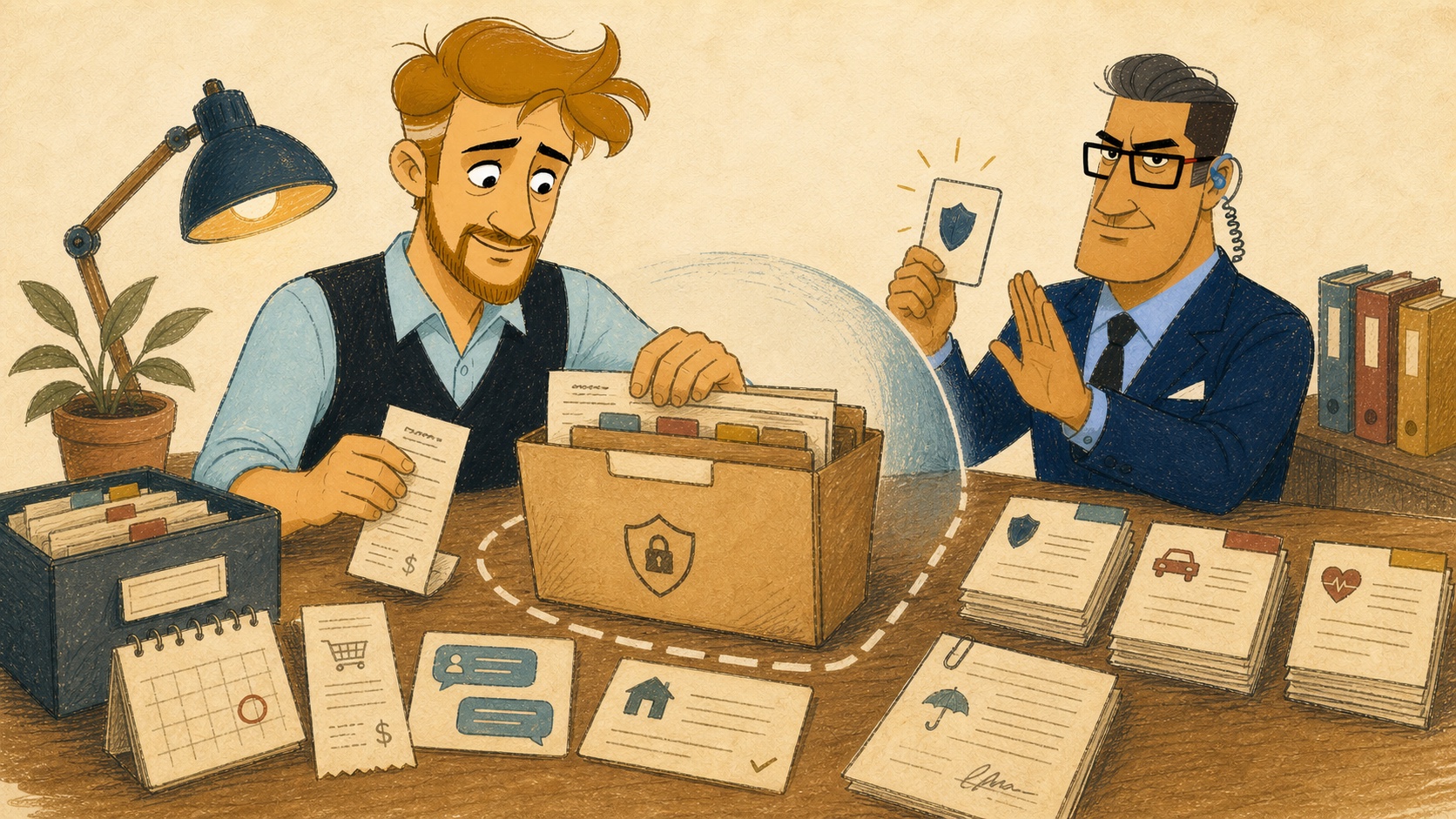
Most people do not keep records because they love archives.
They keep them because one day they may need to explain what happened.
A receipt. A message thread. A tenancy note. A customer-service email. A payslip. A calendar entry. A screenshot taken in the moment because something felt off. On an ordinary day, those fragments look like clutter. During a complaint, dispute, insurance claim, workplace issue, family-law discussion, or legal review, they can become the material a person needs to reconstruct the facts.
That is a different way to think about personal data.
It is not only a privacy risk. It is also personal evidence.
The problem is that most personal evidence lives in the wrong shape. It is scattered across apps, folders, inboxes, phones, exports, PDFs, screenshots, and private conversations. The person may technically have the information, but still not have a useful account of it.
What happened first?
Which messages support the timeline?
What did the company say in writing?
Which records are safe to share, and which should stay private?
Official complaint systems already understand part of this pattern. The Consumer Financial Protection Bureau’s complaint database lets people explore complaint trends, read eligible narratives, and export data. It also states important limits: published narratives are consumer descriptions, personal information is removed before publication, and the database is not a statistical sample of consumer experience. The FCC’s consumer complaint data is another public example of complaints becoming structured records.
Those systems are public and institutional. The personal version is messier.
Someone preparing their own complaint does not start with a clean database. They start with a half-remembered sequence and a pile of private material. The useful product is not a magic legal opinion. It is a private workbench that helps them gather, search, order, and inspect their own evidence before deciding what to do next.
That workbench should be careful.
It should help the person build a timeline without pretending the timeline is the truth. It should link every summary back to the source. It should let the person remove irrelevant or sensitive material. It should make sharing deliberate: export this page, quote this message, include this date range, leave the rest alone.
This is where personal insight engines can become practical without becoming invasive.
For Mimoto, message history is one obvious example. A conversation archive can help someone understand a difficult pattern, prepare a factual note, or collect examples for a professional conversation. But the value depends on control. The person should be able to inspect the raw material, challenge the summary, and decide what leaves the private space.
A good personal evidence folder would feel less like surveillance and more like preparation.
Not “the system knows what happened.”
More like: here are the records, here is the timeline they appear to support, here are the source links, here is what has been excluded, and here is the smallest shareable export for the job in front of you.
That is a quieter promise than automated advice.
It is also more useful.
Further reading: CFPB Consumer Complaint Database and FCC Consumer Complaints Data.