

Baxnet Blog · founder-note
Personal Data Should Be An Asset For The Person
TL;DR: Personal data has economic value. Baxnet's view is that people should own useful context about themselves, not just generate value for platforms that profile them.
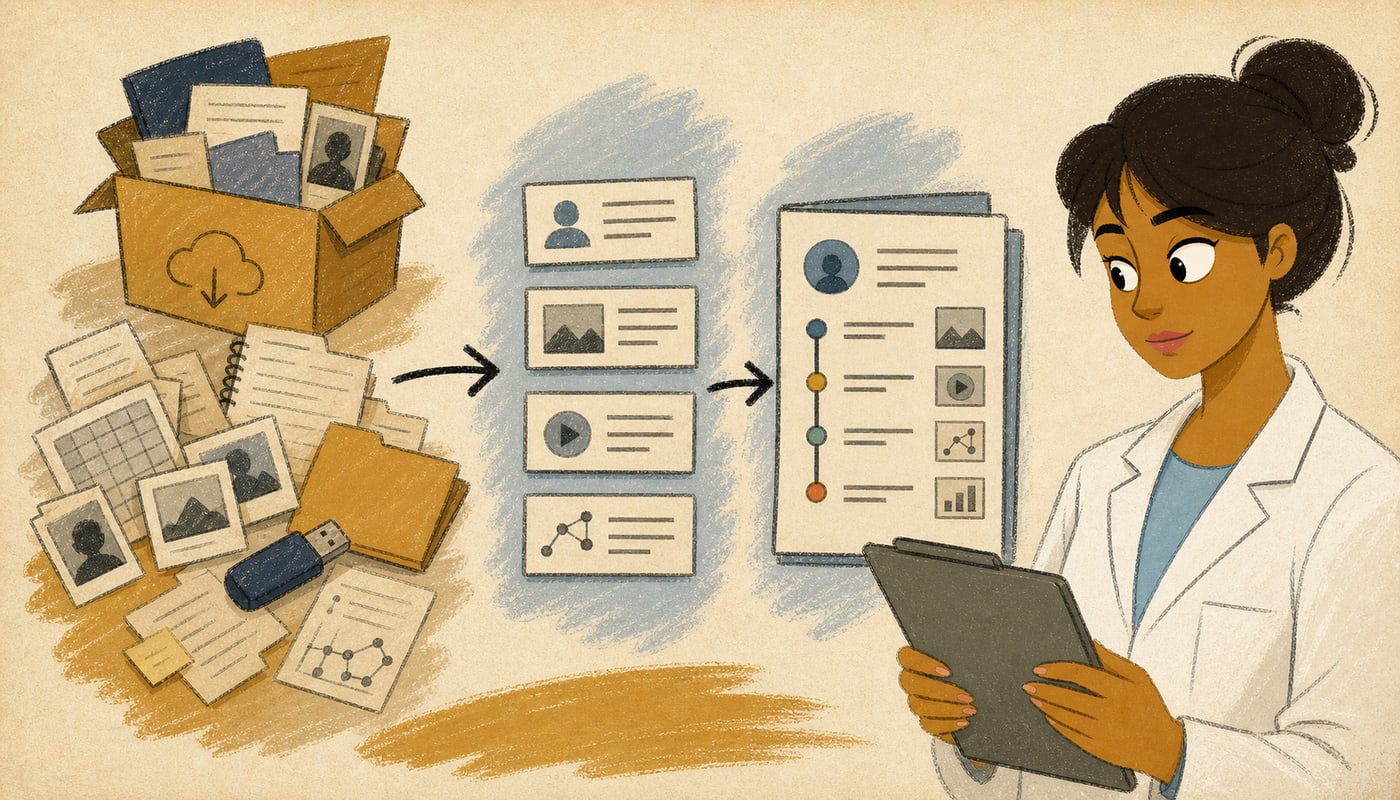
Most people already participate in the personal data economy. They just do not get much of a say in how it works.
They browse, message, search, buy, watch, travel, read, ask, and react. Around those ordinary actions, large systems build context. Some of that context is used to recommend useful things. Some of it is used to hold attention. Some of it is sold indirectly through advertising markets, targeting systems, ranking systems, and other layers most people never see.
Some of that is useful. Some of it is attention exploitation dressed up as personalization.
That imbalance is one of the reasons Baxnet exists.
My background in banking and wealth management shaped the way I think about this. In that world, data was not treated as exhaust. It was treated as a serious business asset. Large technology and business intelligence programs used customer data to understand profiles, match people with products, and make better commercial decisions.
There is a legitimate version of that work. A customer has a need. A product has a profile. If the match is good, data can help the right thing reach the right person.
Later, working around personalization and recommendation engines, I saw the same idea from another angle. A person’s data footprint could decide which content appeared next, what was surfaced, what was hidden, and what kind of experience they were nudged toward.
That experience left me with a simple view: personal data has economic value. The question is who gets to organize that value, interpret it, and benefit from it.
The answer today is usually not the person.
Baxnet is not about encouraging people to download private archives and sell raw files. That would be the wrong framing, and frankly a dangerous one. Raw personal data often contains other people’s context too. It can include relationships, addresses, health information, financial details, old disputes, private jokes, sensitive photos, and fragments that were never meant to become market material.
The more useful idea is context.
If platforms can build valuable profiles from fragments of a person’s digital life, then the person should have a way to build a better, more accurate, more private version of that context for themselves. Not a public dossier. Not a bundle of files for sale. A controlled understanding layer the person owns.
Over time, that context may become something the person can selectively permit others to use: a narrow preference signal, a proof of fit, a memory layer for an assistant, or a way to receive better products without letting every company reconstruct a rough profile from the outside. That is very different from dumping a private archive into a market.
That is the larger direction behind Baxnet’s Personal Intelligence Engines.
Mimoto is the first step because message history is unusually rich. It is not just content. It is memory, relationships, timing, effort, repair, humor, silence, repetition, and change. It is the sort of dataset that can help a person understand their own life better than a generic platform profile ever could.
It is also protected in ways that matter. Much of this data lives encrypted, on device, and outside the normal reach of large advertising systems. That makes it hard to work with, but it also makes it valuable as a starting point for user-owned intelligence.
Building against that data has been a practical education. iMessage history carries years of changing database structures. WhatsApp exports vary by locale, device settings, and date formats. Consumer devices have memory limits. On-device models have real limits too. If the product is going to stay private, it has to respect those constraints instead of pretending the cloud will solve everything later.
That is why Mimoto has developed as a structured product, not a loose prompt box over a private archive. It parses, scores, summarizes, exports, and shows evidence. It tries to be a mirror before it tries to be an adviser.
That boundary matters. Message history can touch emotional, social, legal, and psychological territory very quickly. I do not think a consumer product should casually claim authority over those areas. It can help someone inspect patterns. It can help prepare a clearer export. It can show where communication changed. It should be much more careful about telling someone what that means for their life.
The long-term opportunity is larger than chat. Photos, notes, calendars, documents, health data, browsing history, purchases, and financial records all contain useful context. But the path has to start somewhere concrete.
For Baxnet, the starting point is this: help people know themselves better than the platforms that profile them.
If that can be done privately, carefully, and in a form the person controls, then personal data starts to look less like something extracted from the user and more like an asset the user can put to work.