

Baxnet Blog · founder-note
AI Memory Needs a Delete Button
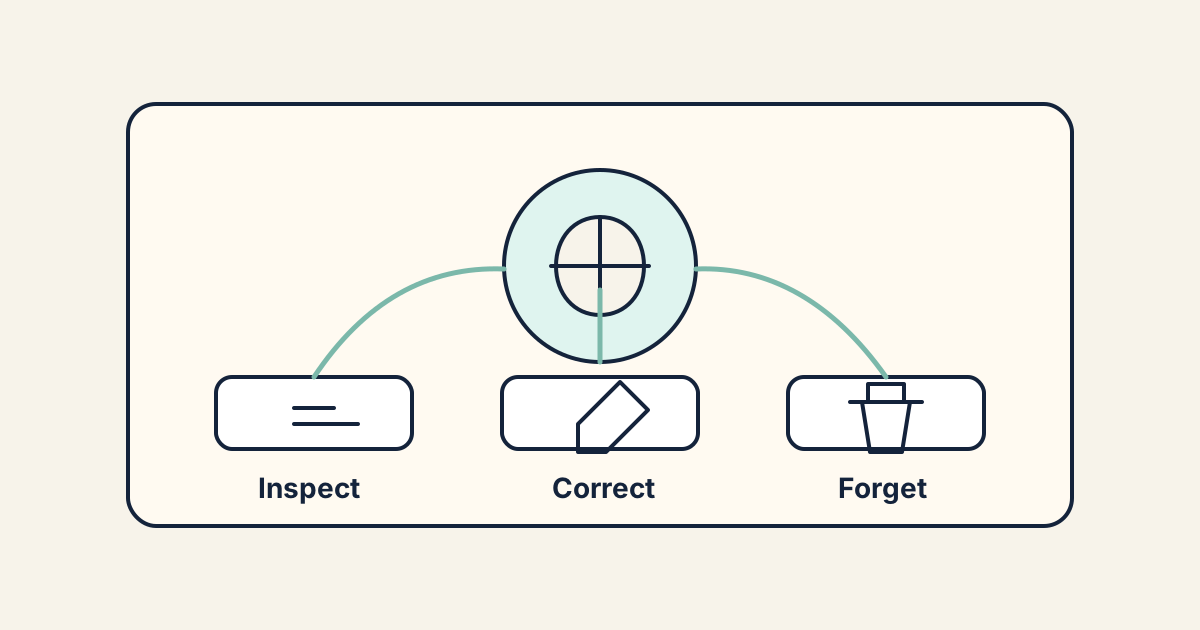
Short answer: AI memory becomes trustworthy when people can inspect it, correct it, and make it forget.
Someone will eventually ask a personal AI a very ordinary question: “Why do you think that about me?”
That question matters more than the demo.
A memory feature can feel useful when it remembers a preference, a project, or a pattern from an old conversation. It can also feel invasive when the memory is wrong, stale, or too private to keep. The product problem is not just whether AI can remember. It is whether the person can live with what it remembers.
That is where a lot of the current AI memory discussion gets too neat. The conversation often jumps straight to better personalization, as if memory is simply a larger notebook. But a memory system is not just storage. It can turn fragments into a profile. It can compress a messy set of conversations into a belief like “this person avoids conflict” or “this person prefers direct advice.”
Sometimes that is helpful. Sometimes it is the kind of inference a person should be able to challenge.
Contrary Research’s March 2026 report on AI memory makes a similar point from the research side: persistent AI memory shifts personalization closer to an identity model, which raises questions about legibility, correction, erasure, and context bleeding between domains.
For Mimoto, this is one of the reasons personal insight engines need strong boundaries. If a tool helps someone understand private history, the insight should stay answerable to the person. They should be able to see the source, correct the interpretation, export the useful parts, and remove what no longer belongs.
Imagine a personal AI that remembers someone “prefers short direct answers” because that was true during a stressful work week. Three months later, the same person is using the tool for reflective planning and wants more nuance. If the memory is hidden, the product keeps nudging the wrong style. If the memory is visible, the person can edit it, delete it, or limit where it applies.
The simple rule is this: if the AI can remember something about a person, the person needs a practical way to disagree with it.
That is not a settings-page detail. It is part of the product architecture.
Further reading: Contrary Research, “Privacy & Identity in the Age of AI Memory” (March 20, 2026).